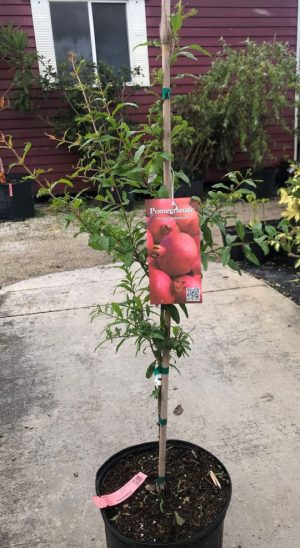
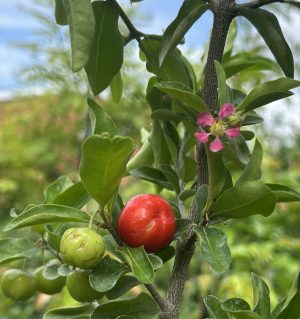
Pomegranate fruit tastes both sweet and tart. They can be eaten out of hand or juiced for a drink. The fruit has been shown to reduce the risk of heart disease.
Call for Availability
Varieties: Azadi and Parfyanka
How to care for Pomegranate
Light. Plant in full sun. It fruits more heavily in full sun than in shade.
Water. Water every 7–10 days when there is no significant rain. Keep soil evenly moist in late summer and early fall; sudden swings in watering split the fruit.
Soil and feeding. It grows in sand to clay but does best in deep, well-drained, slightly acidic soil. Growth is poor on alkaline soil, so avoid spots near concrete. Overfeeding young trees worsens fruit drop.
Size. Grows to about 15 ft trained as a small tree; as a bushy shrub it usually stays 6–12 ft.
Pruning. Let it grow unpruned the first year, then pick 4–6 strong shoots as the framework. Remove suckers as they appear and dead wood in late winter.
Problems to watch. Anthracnose causes dark leaf blotches and brown fruit spots; use a fungicide labeled for pomegranates. Scale, mites and borers occur at times.
Good to know. Self-pollinating, so one plant bears fruit. In South Florida it may fruit year-round.
Sources: UF/IFAS Gardening Solutions: Pomegranates · UF/IFAS EDIS MG056: The Pomegranate